
Foreign portfolio investors' (FPIs') net investment in the domestic debt market in October was the third highest during the current calendar year as foreign investors rushed to lock in higher returns amid global uncertainty and geo-political tensions, market participants said. FPI inflows in debt stood at Rs 6, 322 crore in October against Rs 768 crore in September, according to data on the National Securities Depository Limited (NSDL). Market participants said that the majority of the inflows were channelled through corporate bonds.

Experts believe FPIs will keep a close watch on coronavirus pandemic, its spread and likely impact on the economy while making decisions about investment into India.
Markets regulator Sebi has simplified the procedural requirements for onboarding of Foreign Portfolio Investors (FPIs) in a bid to facilitate ease of doing business and to reduce the time taken for their registration. The regulator allowed designated depository participants (DDPs) to grant FPI registration on the basis of scanned copies of application forms and supporting documents, according to a circular issued on Monday. Granting of registration on the basis of scanned copies has been allowed but trading can only be activated following the verification of the physical documents, it said.

Among the Sensex firms, Wipro, Axis Bank, Titan, UltraTech Cement and HDFC Bank, HDFC, HCL Tech and Reliance were the gainers.

Even as FIIs have pumped in $15 billion in 2013, key indices have declined 3%.

The government will launch the mega public offer of LIC by March and file draft papers with market regulator Sebi by the end of this month, an official said. Finance Minister Nirmala Sitharaman had last week reviewed the progress of the initial public offering (IPO) of Life Insurance Corporation (LIC) in a meeting with top officials of the ministry. The official said the September 2021 quarter financials of LIC are getting finalised as well as fund bifurcation is in progress.

Investors should view any bounce-back in bank stocks as an opportunity to exit the pack, analysts suggested, as the worst may not be over yet. The recent quarterly results of HDFC Bank and Axis Bank disappointed the Street, triggering a marketwide selloff by foreign institutional investors, especially in banking counters. While HDFC Bank, which was the anchor for the market correction during the past week, ended 2 per cent higher amid short covering on Wednesday, Axis Bank's shares settled 3 per cent lower.

Being part of category-I implies lower compliance burden, simplified know-your-customer norms and documentation requirements, and fewer investment restrictions.

As many as 40 staffers, in the key equities and investment banking division in India, could be asked to go as part of the London-headquartered lender's global layoffs, said people aware of the development. HSBC India declined to comment.

In a dazzling resurgence, foreign investors have graced the Indian equity markets with an influx of nearly Rs 1.5 lakh crore in 2023, fuelled by optimism over the country's resilient economic fundamentals amid shadows of a gloomy global scenario. Experts believe that the positive trend may continue in 2024. This follows Indian equities witnessing the worst-ever net outflow of Rs 1.21 lakh crore by FPIs in 2022 on aggressive rate hikes by the central banks globally after net inflows for three consecutive years.

The biggest bounce is in the realty sector, where the industry index jumped 80%. There's been a turnaround also in automobiles and ancillaries (up 45%). The pharma and health care indices have a welcome return of roughly 35%.

'The market was expecting the Budget to do more, given the domestic economic slowdown and global uncertainty. Over the next few days, the market is expected to absorb the volatility.'

Despite markets turning volatile, share sale activity at India Inc has surged to its highest level in five months. So far in March, promoters, strategic investors and other large shareholders have been able to offload shares worth more than Rs 33,000 crore-the most since November-defying uncertain market conditions. Both the Sensex and the Nifty are on course to post their fourth straight monthly loss amid headwinds, such as interest rate tightening by the US Federal Reserve and the global banking crisis.
'The good news is that money continues to flow into India-focussed offshore funds.'

MNC funds invest in companies where foreign promoters have more than 50 per cent shareholding.

Mutual funds' equity buying remained elevated for the fifth consecutive month in December, taking the net equity purchase past Rs 1.7 trillion in 2023. The aggressive buying in December indicates that flows into equity funds are likely to have remained unaffected by the sharp run-up in the market last month. Mutual funds (MFs) bought equities worth Rs 23,000 crore last month (until December 28) compared to Rs 18,000 crore in November, shows data from the Securities and Exchange Board of India (Sebi).

As many as 31 mainboard IPOs raised a cumulative Rs 26,272 crore in this period, according to Prime Database. During the April-September 2007 bull run, 48 IPOs totalling Rs 21,243 crore were launched. The number of deals in H1FY24 was 2.2 times that of the same period of the last fiscal year, but the amount raised was 26 per cent lower.

More than half a dozen companies will hit the market with their initial public offerings (IPOs) between now and the end of next week. The cumulative amount raised from these IPOs is expected to be around Rs 8,000 crore. Stationery products firm DOMS Industries and home financier India Shelter Finance's IPOs - of Rs 1,200 crore each - got off to a flying start on Wednesday (December 13), with the former garnering over six times the subscription and the latter getting 1.5 times subscribed.

Among the Sensex firms, Tech Mahindra, Tata Motors, Bharti Airtel, Wipro, Bajaj Finserv, HCL Technologies, Bajaj Finance, Larsen & Toubro, Mahindra & Mahindra and UltraTech Cement were the biggest laggards. IndusInd Bank, Power Grid, HDFC Bank, ICICI Bank, NTPC, Reliance Industries, HDFC and Tata Steel were the prominent winners.

These include increasing the public float in listed companies to 35 per cent from 25 per cent, increasing the minimum statutory limit for FPI investment in a firm from 24 per cent to the sectoral foreign investment, and lowering government holding in listed public sector undertakings.
Waves of foreign portfolio investments worth over Rs 51,000 crore splashed into the Indian market in 2021 as overseas investors turned net buyers of domestic securities for the third straight year while excess global liquidity and other factors steered the ebb and flow of their investing ways. With the global financial system still flush with liquidity, emerging market assets, especially equities, might well remain the preferred investment avenue for many more months to come, experts opined. As the equities sizzled during most of 2021, that also saw economy slowly coming back into the recovery path, Foreign Portfolio Investors (FPIs) turned net buyers but their investment is much less compared to net inflows of Rs 1.03 lakh crore in 2020.

Fund managers are withdrawing after a two-year long run in public sector bank (PSB) stocks. Domestic mutual funds (MFs) were net sellers of PSB stocks for the first time in nine quarters, offloading shares worth Rs 1,800 crore in the March quarter, said a report by ICICI Securities. In the previous eight quarters, fund houses had invested more than Rs 10,000 in PSBs amid deep discounts in valuation vis--vis their private sector peers.

Foreign portfolio investors (FPIs) infused Rs 11,630 crore in the Indian equity markets in April on the reasonable valuation of stocks and appreciation in the rupee. This came after FPIs infused a net sum of Rs 7,936 crore in equities in March, mainly driven by bulk investment in the Adani Group companies by the US-based GQG Partners. However, if one adjusts for the investments of GQG in Adani Group, the net flow was negative.
The stock market's continuing love affair with the bears is making investors shy away from not only domestic mutual funds, but also India-dedicated foreign funds, which is evident from the redemption pressure on them.

Foreign portfolio investors (FPI) remained net buyers in Indian markets in October so far, pumping in a net Rs 17,749 crore in the month as better than expected quarterly results, the opening of the economy, and resumption of business activities kept investors' interest intact. In equities, FPIs invested a net sum of Rs 15,642 crore and the debt segment saw an inflow of Rs 2,107 crore during October 1-23, the depositories data showed. The total net investment during the period under review stood at Rs 17,749 crore.

The 50-share Nifty scaled a high of 10,227.30 intra-day but succumbed to profit-booking to finish at 10,155.25

Foreign investors pumped in Rs 11,119 crore in the Indian equities in December, making it the second consecutive monthly inflow, despite increasing concerns over the re-emergence of Covid-19 cases in some parts of the world. However, foreign portfolio investors (FPIs) have turned cautious in recent days. The inflow in December was much lower compared to Rs 36,239 crore invested by FPIs in the month of November, data with the depositories showed.

'As the Indian economy continues to expand over the next three years, mid- and small-caps should do well as they have higher exposure to the domestic economy than large-caps.'
State Bank of India was the biggest loser in the Sensex pack, shedding 1.69 per cent, followed by Asian Paints, Kotak Mahindra Bank, HCL Technologies, Reliance Industries, Wipro, IndusInd Bank, Infosys, Power Grid and HDFC twins. In contrast, Nestle, Maruti, Bharti Airtel, Tata Motors, ITC and Hindustan Unilever were among the gainers.

Notwithstanding concerns about lofty valuations, smallcaps recorded their most significant monthly gain in nearly three years in November. The National Stock Exchange Nifty Smallcap 100 finished the month with a 12 per cent gain, the most since February 2021 when it rose by 12.2 per cent. After declining by 4.1 per cent in the preceding month, the Nifty Midcap 100 rose by 10.4 per cent, the most since July 2022.

The investors had pumped in a net sum of Rs 2,965.66 crore on February 11, the second-highest single-day inflow so far this month.

From the Sensex pack, Reliance Industries fell the most by 2 per cent. Tata Steel, Bajaj Finserv, ITC, NTPC, Bharti Airtel, Tech Mahindra, Titan, Axis Bank and Bajaj Finance were among the other major laggards.

Domestic mutual funds (MFs) have kept their faith in the Indian stock market despite multiple headwinds all through 2022-23 (FY23), with their net flows into equities crossing the Rs 1.5-trillion mark for the second consecutive financial year. MFs pumped a net Rs 1.53 trillion into equities till March 1, 2023, the Securities and Exchange Board of India (Sebi) data shows, as compared to Rs 1.72 trillion in FY22. Since FY15, MFs have been net buyers of equities, except in FY21, when they sold a net Rs 1.21 trillion.

'Retail investors have to stick to their asset allocation plans and continuously do portfolio reviews.'
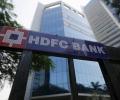
The country's most valuable lender HDFC Bank can perhaps no longer claim to be a favourite of foreign portfolio investors (FPIs). Two data indicators, both somewhat interconnected, point to this - the diminishing premium of HDFC Bank's American depositary receipts (ADRs) compared to local shares, and the ample investment opportunities available to FPIs in the domestic market. The ADR premium has shrunk to below 5 per cent, down from over 30 per cent in March 2021, and even lower than recent levels.

The benchmark Nifty and Sensex could see another 8-10 per cent from the current levels, said HDFC Securities in its outlook for equity markets in 2024. The brokerage said that the market movement in the next year will not be linear, and there will be more volatility. When asked about the market reaction to the General Elections in 2024, Dhiraj Relli, managing director and CEO of HDFC Securities, said more than the outcome of the elections, the market movement in the next three to four months will decide the market trajectory post elections.

However, it is noteworthy that foreign investors pumped in money on the day of election results as the mandate became clear

HUL was the top loser in the Sensex pack, shedding around 4 per cent, followed by Maruti, HDFC Bank, PowerGrid, IndusInd Bank, HCL Tech and Bajaj Finserv. On the other hand, Axis Bank, SBI, ONGC and ICICI Bank were among the gainers. NSE Nifty fell 149.95 points to 13,817.55.
Foreign portfolio investor (FPI) flows into India may remain tepid in 2022, said a recent note by Goldman Sachs, who now peg the foreign portfolio investment into India at $5 billion in 2022, down from their earlier forecast of $30 billion with risks skewed to the downside. "There has been $15 billion of equity outflows YTD in India already, and the IPO of the largest insurance company has been pushed out. "Additionally, with no mention of India's inclusion in global bond indices in the Union Budget, there are risks to our already conservative base case assumption of an announcement of India's likely inclusion into the GBI-EM Global Diversified Bond Index in Q4-2022," wrote Andrew Tilton, Goldman Sachs' chief Asia-Pacific economist in a co-authored report with Santanu Sengupta and Suraj Kumar.

'The Budget must be pro-growth, focusing on infrastructure creation while also managing the fiscal deficit.'
